

Arrogance in the Dental Profession
 It is no secret that dental social media groups radiate some of the most negative vibes in the dental profession. I have watched in disbelief how some of my colleagues post cases, how they ask for help, and how they treat colleagues who try to come to the rescue. Unfortunately, colleagues who respond to pleas for help in good faith are often ridiculed mercilessly by their peers. Clearly—as the saying goes—“no good deed goes unpunished.”
But I am not afraid of ridicule. I know the facts are on my side. I could decide not to get involved and no one could blame me for doing so. But I simply cannot stand on the sidelines and say nothing after the career I have had. If I don’t speak up for what is right, who will?
It is my observation that colleagues who want help often post poorly taken X-Rays that are not even a complete set. It is impossible to make suggestions for complex cases without having a full series of X-Rays, a set of models, some pictures and other important information such as medical and dental histories and periodontal charting. Why were these basics not taught in dental school?
Recently someone posted a single upper posterior X-Ray in a dental social media group. The X-Ray showed large restorations for the bicuspid and molar, teeth which had long roots and excellent periodontal bone. The second molar was missing and replaced with an implant fixture that necessitated sinus lift surgery and bone grafts.
I pointed out in a very nice way that every space does not require implant replacement, even though this approach is popular and lucrative. The only reason for replacement of the second molar would be concern for super-eruption of the opposing dentition. Patients can function just fine without the second molar. One of my own second molars is missing and I really don’t miss it. Opposing teeth also do not always super-erupt—and my very own mouth exemplifies this fact.
Of course, no information was posted about the condition of the opposing teeth. If the two opposing molars also have large restorations, replacing the restorations with two splinted crowns would prevent super-eruption from ever happening. That would be far less invasive and more predictable than implant, sinus and bone graft surgery. I have done many such cases, and I can show how these cases have lasted decades with X-Rays.
Another option for replacing the missing second molar is to create bridgework with a distal cantilevered small molar. The bicuspid and molar in the X-Ray that was posted already had large restorations and were clearly not virginal teeth. They are going to need crowns anyway and since they have long roots and excellent periodontal bone, they could easily carry the load of a small cantilever when splinted together. I can show similar cases that have lasted in health for decades with X-Rays.
Contrary to prevailing opinions, Crown and bridgework has a great track record for success when restorations are properly fabricated on natural tooth abutments. Crown and bridgework can compensate for dental problems in a whole area, such as a quadrant. A single tooth implant, by contrast, only fills a hole or a space and does nothing for the teeth around the space. The patient’s problems are never solved. The single tooth implant approach is usually a piecemeal approach to dentistry, while quadrant full coverage restorative dentistry is an overall approach that addresses the causes of recurrent decay and periodontal bone loss in the whole area.
 As soon as I had posted my suggestions, the thought-policing “furies” descended on me with a vengeance. What I was proposing, one individual barked with an air of superior authority, violated “the standard of care.” Group followers echoed in agreement like sheep. No one in the room seemed capable of looking at a restorative problem from a different perspective.
“Well, I have 70 years of documented evidence for the perspective I presented. I can show how such cases lasted for decades, and I have 70 years of documented evidence for what I suggested,” I retorted. “What do you have? Do you want to compare standards of care?”
There was no reply. Crickets chirped loudly outside. A standard for dental care should have real evidence behind it, don’t you think? The fact that naysayers can’t ignore is that crown and bridgework is often a better solution to dental problems than implant therapy. Dental practitioners like Giannobile and Lang arrived at these conclusions years ago with their research:
“The long-term prognosis for implants has been shown to be far less promising than that for natural teeth, even when they are compromised by periodontal disease or endodontic problems1…”
“Often practitioners recommend implants even when teeth are only modestly compromised by caries, the need for endodontic therapy, or periodontal disease to provide the patient with a quick solution to the problem. Less trained individuals often recommend tooth extraction rather than retention. This condemns many teeth that could be treated and returned to good function. Even those teeth that are compromised have a much greater life span than the average implant.2”
 It seems to me that dental social media rooms are replete with such “less trained” individuals, and they often masquerade as “authorities.” What is really sad is that these individuals are nothing more than “one-trick ponies” incapable of considering alternative solutions to dental problems. But the real kicker is not their inability to offer patients real choices; it is the manner in which they proclaim their treatment planning superiority that is particularly disturbing. Anyone who dares disagree is treated to a bitter dish of ridicule.
According to the Cambridge dictionary, arrogance is the quality of being unpleasantly proud and behaving as if you are more important than, or know more than, other people.3 Leadership expert Jim Rohn says that “the worst kind of arrogance is arrogance from ignorance. It’s when you don’t know that you don’t know. Now that kind of arrogance is intolerable.4”
Arrogant individuals often become combative and defensive when confronted with information that is not in their wheelhouse. Social workers Linda and Charlie Bloom have observed that:
“Arrogance is often an expression of a desire to avoid being ridiculed, punished, or controlled by others by whom one feels threatened. Because the arrogant party is most likely in denial of their arrogance, they are unaware that they are fearful and believe that whatever they are attached to being right about is the capital ‘T’ “Truth,” rather than simply their point of view.5”
 There is no way anyone can have a discussion with someone who arrogantly affirms that only their perspective is correct. I ended my conversation with the social media group with this: “Since you know everything, there is no point in having a discussion.” Naturally they did not like that. Unfortunately for them, their arrogance thwarted a valuable learning opportunity for all of the members in the group.
Researchers at the University of Missouri have identified three types of arrogance6:
- Individual arrogance — an inflated opinion of one’s own abilities, traits or accomplishments compared to the truth. Individuals with this type of arrogance have distorted information, limitations in their abilities, overestimation of their information and abilities, and resistance to new information.
- Comparative arrogance — an inflated ranking of one’s own abilities, traits or accomplishments compared to other people. Characteristics of those with comparative arrogance include failure to consider the perspectives of others and a misconception of superiority.
- Antagonistic arrogance — the denigration of others based on an assumption of superiority.
Interestingly, the dental social media group members I encountered epitomized all three types. How sad that social media “authorities” view constructive criticism as a challenge to their superiority rather than an opportunity to learn something new. The ability to examine different perspectives is of paramount importance to finding better solutions for restorative problems.
Social media dental “experts” should understand that patients are individuals so there is no “one size fits all” in treatment planning for individual patients. In the last decade, the Evidence-Based movement in both Medicine and Dentistry has sought to promote a unified simplified approach to treating patients, but they have been unable to do so. In an essay on Evidence-Based Medicine, Gary Klein, author of Seeing What Others Don’t, explains:
“The protocol that works with one problem may be inappropriate for others. EBM formulates best practices for general populations, but practitioners treat individuals and need to take individual differences into account. A treatment that’s generally ineffective might still be useful for a subset of patients.7”
Frank discussion of treatment options should be welcomed as opportunity to enhance personal and professional growth.
But the closed-mindedness of arrogant individuals—like the ones in dental social media group–“creates an echo chamber where dissent is silenced, and alternative viewpoints are ignored,” says Dr. James Thomas, an expert in leadership development and human resources. “As a result, decision-making becomes myopic, and blind spots go unaddressed.8”
 It is my belief that arrogant attitudes are not confined to dental social media groups, but are actually rampant within the dental profession. I know that I did not see much arrogance when I started my career. My recently graduated colleagues and I knew that we knew nothing, and we were eager to learn as much as possible. I am still eager to learn, and continuing education is a big part of my life. Even if I don’t agree with what is presented, I want to see what my colleagues are doing. I was told to keep a running list of my educational courses in 1989 when continuing education was mandated for license renewal. That list is now 55 pages and growing!
Famed physicist Max Planck believed that arrogant attitudes are generational. He maintained that “a new scientific truth does not triumph by convincing its opponents and making them see the light, but rather because its opponents eventually die and a new generation grows up that is familiar with it.9”
How sad it would be if Planck turned out to be right. I do see a glimmer of hope that the newest generation of students and recent graduates seem to be different from their forebears. I’ve met many of them here in Arizona and I am impressed with their open-mindedness and eagerness to learn. I pray that the “system” does not break them.
Dr. Samuel Barondes, Chair of Neurobiology and Psychiatry at UCSF doesn’t agree with Max Planck’s assessment. He also poses a very thought-provoking question:
“If people who disagree with us are never going to change their minds, then why even talk to them?”
Dr. Barondes continues:
“If we don’t engage in discussion with people who disagree with us, we’ll never learn of the reasons [why] they disagree with us. If we cannot address those reasons, our arguments are likely to prove unconvincing. Our failures to convince will only reinforce the belief that we face pigheadedness rather than rational disagreement. A belief in the inefficiency of argumentation can be a destructive self-fulfilling prophecy.9”
So how can we overcome the prevailing attitudes of the arrogant? Dr. John Thomas offers a rational path for the profession:
- Self-awareness is key. Leaders must cultivate a “humble mindset.” They must be open to feedback and constructive criticism.
- Empathy is essential. Leaders must strive to consider alternative perspectives and experiences of their constituents. They must create a culture of inclusivity and respect to ensure that every voice is heard and valued.
- Continuous learning is paramount. Curiosity should be embraced, as well as new ideas and different perspectives.10
 Here is what I have to say to the “arrogant:” There is no more humbling experience in dental practice than having a failure with a patient. Every practitioner has failures. Arrogant individuals try to shrug off the failures rather than face them. There are many reasons why failures occur, and most causes can, in fact, be identified upon investigation—however painful the process. Learning from failures is the first step toward preventing similar failures. The ability to examine different perspectives for treatment planning can go a long way toward preventing failures.
It is my observation that the causes of failure actually fall into one of five categories:
- Misjudgments and misdiagnoses
- Incorrect treatment plans
- Technical errors
- Overlooked flaws that occur during treatment
- Systemic Failures with no obvious or preventable cause.
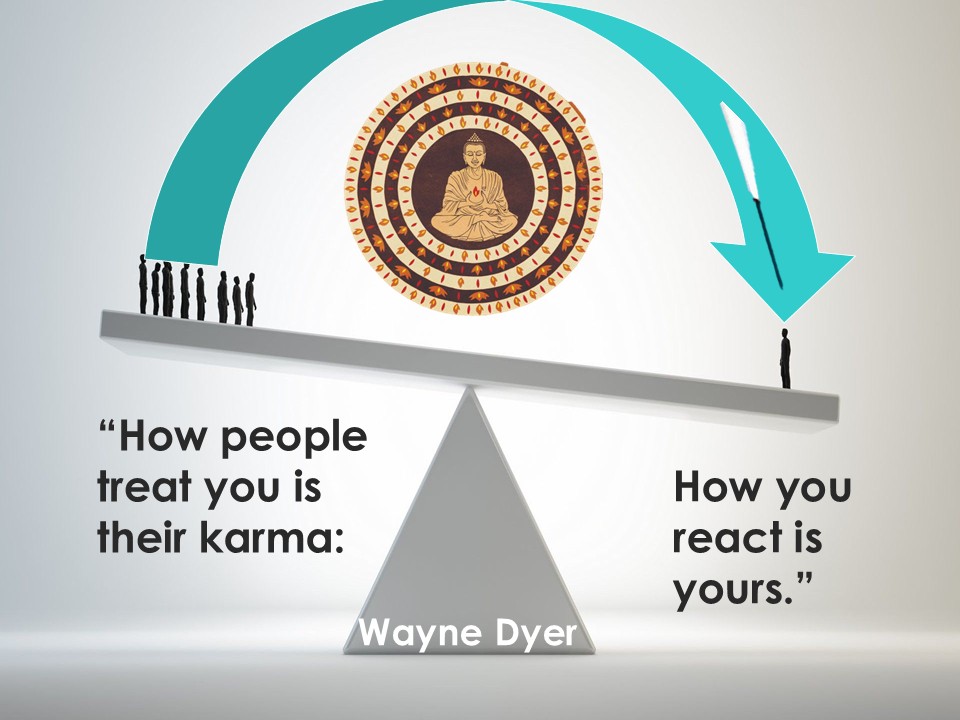
Only by learning why failures occur can practitioners ultimately achieve a high percentage of successful case outcomes. But arrogant attitudes ensure that this learning never occurs. William Butler Yeats encapsulates this thought beautifully: “Arrogance is the quickest way to failure.”
1 Dental Abstracts Vol 61, Issue 4; 2016; p.173; Keep the Ones Youve Got; Giannobile, WV, Lang NP: Are dental implants a panacea or should we better strive to save teeth? J Dent Res 95:5-6, 2016.
2Dental Abstracts Vol 61, Issue 4; 2016; p.173; Keep the Ones Youve Got; Giannobile, WV, Lang NP: Are dental implants a panacea or should we better strive to save teeth? J Dent Res 95:5-6, 2016
3 https://dictionary.cambridge.org › dictionary › english › arrogance
4https://www.appleseeds.org/rohn-leadership.htm
5 Linda Bloom, L.C.S.W., and Charlie Bloom, M.S.W.; “The Antidote to Arrogance: Be the Change You Want to See in this World;” reviewed by Jessica Schrader; https://www.psychologytoday.com/us/blog/stronger-at-the-broken-places/201910/the-antidote-to-arrogance; Posted October 4, 2019.
6Researchers at the University of Missouri, Columbia; “Research worth ‘bragging’ about: Three types of arrogance identified;” https://neurosciencenews.com/three-types-arrogance-15110/; October 22, 2019.
7Klein, Gary; “Evidence Based Medicine;” This Idea Must Die Scientific Theories that Are Blocking Progress; edited by John Brockman; Edge Foundation; Harper Collins Books; 2015; p. 220.
8Thomas, Dr. James, PhD; “The Pitfalls of Arrogance in Leadership: A Path to Self-Destruction;” https://www.linkedin.com/pulse/pitfalls-arrogance-leadership-path-self-destruction-dr-james-thomas-pedlf; April 11, 2024.
9Barondes, Dr. Samuel; “Science Advances by Funerals; This Idea Must Die Scientific Theories that Are Blocking Progress; edited by John Brockman; Edge Foundation; Harper Collins Books; 2015; p. 481-2.
10Thomas, Dr. James, PhD; “The Pitfalls of Arrogance in Leadership: A Path to Self-Destruction;” https://www.linkedin.com/pulse/pitfalls-arrogance-leadership-path-self-destruction-dr-james-thomas-pedlf; April 11, 2024.

You may also like
Speaking of Dental Speaking…

Mentoring