
Dealing with Difficult People
It has been said that dentistry is half art and half science, but it is, in reality, so much more. In addition to those facets, dentists are specialists in interpersonal relations and human behavior. The APA Dictionary of Psychology defines interpersonal relations as1:
 1. the connections and interactions, especially ones that are socially and emotionally significant, between two or more people.
2. the pattern or patterns observable in an individual’s dealings with other people.
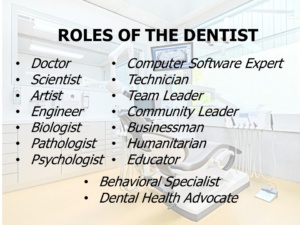
In the dental office, interpersonal relationships include doctor-patient relationships; doctor-team relationships; and relationships with communities. Developing interpersonal relationships in these arenas boils down to one word: leadership. Being a dentist really means being a leader and inspiring role model who others can emulate.
Understand Who You Are
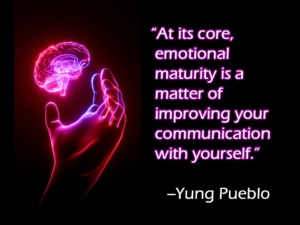 Before relating to anyone else we first have to relate to ourselves—in other words, we have to become self-aware and comfortable with who we are as both person and professional. “Self-awareness,” says Tchiki Davis, PhD; involves monitoring our stress, thoughts, emotions, and beliefs. It is important, because it’s a major mechanism influencing personal development.2” Not one of us is perfect—we are emotional beings who have been shaped by the environment in which we were raised. We are not the persona we are expected to project to the world. Inside we often lack self-confidence and solid control of our emotions. We can be so pre-occupied with our inner selves that we are totally oblivious to the people around us.
If we let these weaknesses get the better of us, we will never be able to develop genuine interpersonal relationships. We have to make a conscious effort to rise above our failings in order to show respect, empathy and compassion to others. Tchiki Davis emphasizes that “increasing self-awareness of false attitudes or inappropriate behaviors requires peace of mind, time, attention, and focus.” Most of us, she explains go through life on “autopilot,” so we only self-reflect when something goes wrong.
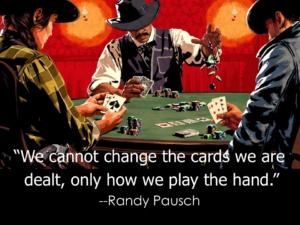 Self-examination before something goes wrong is the key to developing those qualities we most value. These qualities determine how we handle the stress, difficult people, and upsetting situations that are inevitable. Randy Pausch, author of The Last Lecture, famously remarked that “we cannot change the cards we are dealt, only how we play the hand.3”
Qualities of the self-aware include:
-
-
-
-
-
-
-
- The ability to listen and truly hear what is being said
- The ability to consider and respect the perspectives of others with empathy and compassion
- The ability to regard oneself with high self-esteem and still remain humble
- The ability to conduct honest self-assessment of strengths and weaknesses
- The ability to control emotions when “buttons are pushed”
- The ability to pursue the ethical path even if sacrifices are required
- The courage to change for the better
-
-
-
-
-
-
Control Your Emotions
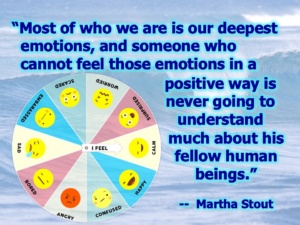 Being self-aware requires us to project ourselves as calm and rational even when seething inside. Patients are fearful when they sit in the dental chair, and they expect us to be on our A-game and handle them with our best TLC. They can’t know about the aggravation we had with a previous patient or staff member. They can’t know that we are feeling sick or that we have personal problems. Leave all that baggage at the door when entering the treatment room.
Here is a perfect example: I was treating a patient who was in the process of moving to another state. I saved that patient’s canine so that she did not have to have implants. Her case was perfect–everything was going extremely well, and I couldn’t have been more pleased. Unfortunately, I failed to complete the case on her time-table. Patients don’t want to understand that buying dentistry is not like buying apples in the grocery store. Dentistry is painstaking and custom-made. Materials are heated repeatedly close to their melting points and that increases the likelihood of errors which result in steps that have to be repeated. Anything custom-made cannot be rushed or disaster is the likely result.
Because the case did not go according to her plan, she became extremely angry and she started to yell at me in front of her husband, who cowered in the corner of the room like a mouse. At the end of her tirade, she screamed: “you should get cancer!” Who makes statements like that? Of course, I was agitated inside and incensed that she did not appreciate my efforts to save her teeth and prevent her from having to go through implant surgery. But I did not yell back. The worst response to a raving lunatic is to stoop to his or her level of undignified behavior.
Instead, I mustered in my calmest voice: “You don’t really mean that, do you?” I thought her husband would fall through the floor and die of embarrassment. The patient was completely thrown off guard, completely de-fused. That was not the response she expected. She just sat there–speechless.
I returned part of the fee and I gave her the unfinished case to take with her to her new state. At this point I was in the middle of connecting overlay bridgework to fit with precision over the underlay copings that were already cemented permanently on the abutments. This design, although complex, served as a contingency plan to manage any future complications that might arise with the underlying abutments, since they had to support long-span bridgework.
Karma often takes the form of poetic justice. My patient could not find a single practitioner in her new state who understood how to finish her treatment (which should have only required at most 2-3 visits of fittings to achieve a perfect result). The dentists she ultimately chose did not contact me about how to proceed. I am sure she was forced to submit to extensive and invasive procedures involving implants that were totally unnecessary.
Understand Who You are Dealing With
Successful dentistry consists of far more than providing stellar technical care. Equally important ingredients for success include building rapport and human connection. Patients must feel comfortable in the dental office, have confidence in the practitioner, and trust that their concerns will be addressed with respect.
I am proud of the amazing work that I have done for patients during the course of my career. But what is most precious to me are the special relationships that I developed with my patients and team members. These relationships persist, even though I am no longer providing care and live in another state.
Even with strong relationships, it is a daily struggle to truly know our patients and team members. “Everyone you meet is fighting a battle you know nothing about,” Robin Williams once declared. The battle is not apparent on the outside, but sometimes an onslaught is projected outward that seems totally out of character. It is important to understand that distress may come out at you, but most often it has nothing to do with you. You just happened to be in the wrong place at the wrong time. Robin Williams offers great advice for handling this scenario: “be kind always.”
Marcia Reynolds of Psychology Today explains that “tears and defensive anger are natural physiological responses when someone feels hurt, disappointed, or sad.4” The real story is not what we see on the surface, so it is important to avoid jumping to conclusions and reacting impulsively.
Becoming confrontational is not a good way to address an emotional onslaught. Dr. Reynolds suggests that “instead of avoiding or trying to fix someone, become keenly interested in learning more about what they think happened and why.” But when people are acting emotionally and irrationally, the day of the outburst is not the day to do that. On a different day, they will not possess the elevated emotional energy and they will be more amenable to rational discussion.
The goal of any discussion is not to “fix” or judge the patient—leave that to the therapists. The goal is to understand what triggered the outburst and let the patient know that you are a “safe” listener who is on their side. “See the person in front of you as capable of growing with some reflection. Dr. Reynolds explains that patients “want you to be present more than they need you to be perfect.”
Here is an example from real-life experience. Mr. H. was a patient who I knew for my entire career. I first met him when I was a student in high school and “moonlighting” as a dental assistant. He was a fine gentleman who was always respectful and deeply appreciated the efforts of every team member in the office. He came to the office with severe periodontal disease and missing teeth in the 1960s. My father treated Mr. H. with full mouth rehabilitation that halted the progression of the periodontal disease. Miraculously, my father and I enabled him to hold onto his teeth for the remainder of his life—five decades in total.
Mr. H.’s greatest fear was that he would end up all alone in life. He did everything humanly possible to avoid that fate. He had three wives–all of whom were our patients, and all of whom passed away. He was particularly attached to his last wife, who was one of the finest ladies I have ever known. He literally clung to her when I saw the two of them walking down the street. He also had an absolutely amazing daughter who was extremely accomplished and wonderful in every way. But sadly, she contracted cancer and passed away as well. So, there Mr. H. stood at age 90—stuck with the fate he had so desperately tried to avoid—he was completely alone.
 Was he angry! Suddenly this man sitting in my chair–one of the finest, well-mannered gentlemen I have ever known—lashed out at staff members in the meanest possible way. I did not confront him. Instead, I put my hand on his shoulder and said in my kindest voice, “I can see that you’re having a bad day. Why don’t you come back another day? I don’t care about the appointment.” Mr. H. grumbled and left the office.
The next day Mr. H. called, profusely apologizing. He saw a therapist who helped him come to terms with being alone. Mr. H. lived another six years and returned to being the fine gentleman that was his true character.
Conclusion
Eric Jones, contributor to the Thinking in Educating website, offers great advice for discovering the reasons behind human behavior:
“When someone’s behavior frustrates us, it’s easy to label them as “rude,” “selfish,” or “irrational.” But pausing to ask why they’re acting that way fosters empathy. Maybe the impatient driver rushing through traffic is racing to a hospital. Perhaps the coworker who’s always late struggles with undiagnosed ADHD.
This doesn’t mean excusing harmful actions, but understanding the why behind them helps us respond constructively. It also reminds us that our own behaviors—even the ones we’re not proud of—are influenced by factors we might not fully control.
Eric offers several pointers for navigating confusing behaviors:
- Ask questions (tactfully): “I noticed you seemed upset earlier. Want to talk about it?”
- Look for patterns: Is their behavior situational or consistent?
- Reflect on your reactions: Are you projecting your own biases?
- Set boundaries: Understanding someone doesn’t mean tolerating toxicity.
Dealing with people can be messy and unpredictable. However, if we explore why someone is behaving badly, we can build understanding, stronger connections and make wiser decisions. As Eric points out, we need to “cut ourselves and others a little slack.”
I will never forget the time a very difficult patient sat in the chair for her first visit, posturing my father and I with a list of demands. After she finished her unpleasant monologue, my father looked her straight in the eye and declared, “You’re not going to give me a heart attack like you gave your last dentist.” Everyone laughed—but the patient got the message. She shaped up real fast, and she actually turned out to be a very good patient.
There is no way to escape dealing with difficult people. Just don’t let them get you!

1APA Dictionary of Psychology; Definition of Interpersonal Relations updated on 4/19/2018; https://dictionary.apa.org/interpersonal-relations
2Davis, Tchiki, PhD; “What Is Self-Awareness, and How Do You Get It? 11 ways to achieve greater self-awareness; Psychology Today; March 11, 2019; https://www.psychologytoday.com/us/blog/click-here-for-happiness/201903/what-is-self-awareness-and-how-do-you-get-it
3Pausch, Randy, with Jeffery Zaslow; The Last Lecture; Hyperion Books, New York; 2008.
4Reynolds, Marcia, Psy.D. “Wander Woman;” “How to Be Helpful When Someone is Emotional;” Psychology Today; Posted December 22, 2018; https://www.psychologytoday.com/us/blog/wander-woman/201812/how-to-be-helpful-when-someone-is-emotional
5Jones, Eric; “Understanding Human Behavior: Why Do People Act the Way They Do;” Thinking in Educating; July 14, 2025; https://www.thinkingineducating.com/understanding-human-behavior-why-do-people-act-the-way-they-do/

You may also like

Ditch those Resolutions! Make a Strategic Plan Instead!